

Botanical description
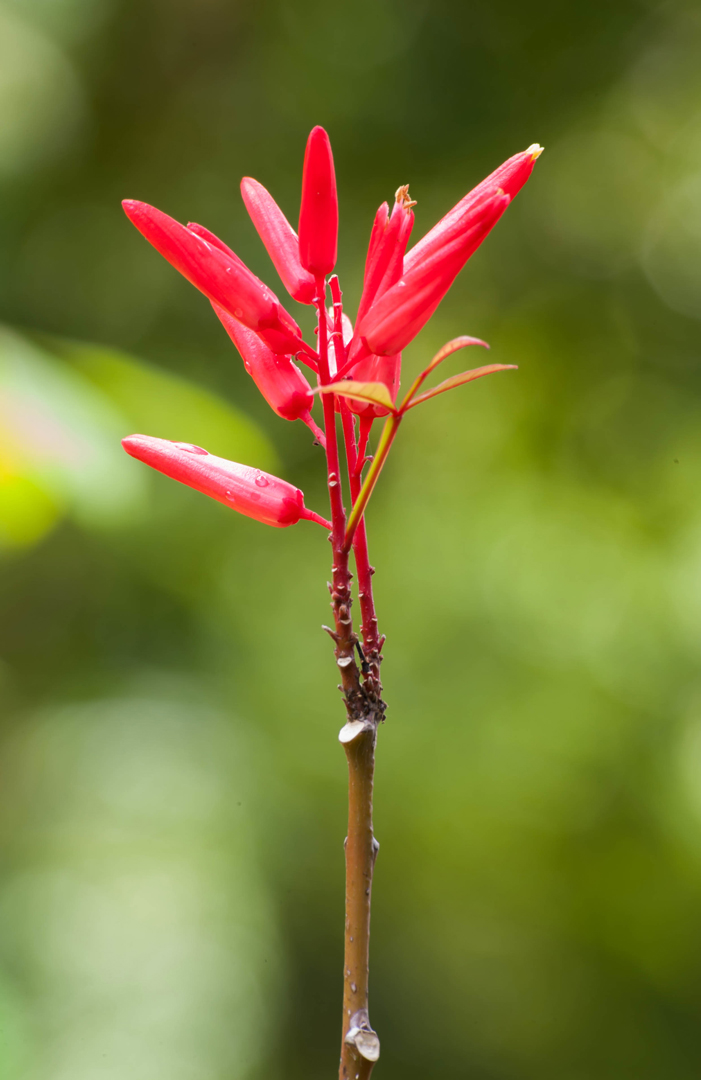
Couachi (Quassia amara L.) is a tropical shrub between 2 and 8 m tall. It produces imparipinnate leaves (three to five leaflets) ranging in length from 5 to 16 cm. Its inflorescences bear bright red flowers and its fruits are 1 to 2 cm long drupes.
French: quinquina de Cayenne
Nengee tongo: kwasi (Alu., Ndj., Paa., Saa.)
Palikur: kwa∫ßan
Portuguese: quina, quina-de-Caiena
In French Guiana, couachi is a species known for its bitter taste, which is present in all parts of the plant. The Creoles use it for its febrifuge, cholagogue and vermifuge properties. It is also used, notably by the Palikur, to treat malaria and dengue fever. It is known as Quinquina de Cayenne, because of its bitterness and its traditional use against malaria.
In Suriname, cups called Bitter-cups, Tonic-cups or Kwasi Bita beker are carved directly from couachi wood. They are used for strictly medicinal purposes to stimulate the gastrointestinal tract, improve appetite, combat chronic fatigue or as a febrifuge. To achieve this, the cups are filled with a liquid such as alcohol or water, to recover the bioactive molecules.
In Amazonia, this plant has long been used as a substitute for quinine in the treatment of malaria, and also as an insecticide, tonic, febrifuge and against hepatitis. It is recommended for diarrhea, stomach ache, anemia, liver, stomach and gastrointestinal problems.
More widely in Brazil, leaf tea is used to treat measles and as a mouthwash after dental extraction
.


Discover our Couachi-based products

Are you interested in our ingredients for professionals?

